

This series explores the paradoxes leaders must learn to hold
This series explores the paradoxes leaders must learn to hold, where simple answers fail, and real decisions begin.
Each post examines a tension at the heart of modern leadership, strategy, and systems thinking.
Leadership Paradox
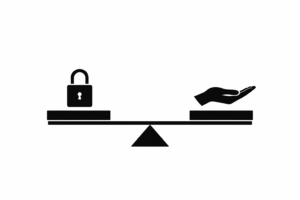
The Control vs Trust Paradox
The more you control,
the less ownership you get.
Control creates compliance.
Trust creates accountability.
Leaders often tighten control when outcomes slip.
More reporting.
More approvals.
More oversight.
It feels responsible.
But something subtle happens.
When every decision is monitored,
initiative retreats.
The paradox is this:
Control reduces risk in the short term.
Trust builds resilience in the long term.
High-performing leaders don’t remove controls.
They design clarity
and then trust people to act within it.
Decision Paradox
The Data vs Judgment Paradox
Data is direction.
Not permission.
It tells you:
• where to look
• what is changing
• what no longer fits
It does not tell you:
• when to decide
• what to prioritise
• what risk to accept
That moment belongs to the leader.
The paradox is knowing when data is enough.
not because it is complete,
but because waiting for certainty would cost momentum.
Judgment begins where data ends.
And data always ends earlier than we’d like.

Strategy vs Execution Paradox

Strategy without execution is theatre.
Execution without strategy is chaos.
Most organisations don’t fail because they lack ideas.
They fail because:
• strategy lives in decks
• execution lives in silos
One decides what matters.
The other decides what actually happens.
Treat them separately
and you optimise activity, not outcomes.
The real work of leadership is not choosing between strategy and execution.
It’s binding them together through decisions.
👉 Where in your organisation are strategy and execution quietly drifting apart?
Operational Paradox

The Efficiency vs Resilience Paradox
Efficiency feels smart.
Until it breaks.
The more you optimise for:
• speed
• cost
• utilisation
…the more fragile the system becomes.
Resilience looks inefficient:
• slack
• buffers
• redundancy
• testing
Until disruption hits ! and it’s the only thing that works.
Lean systems win in calm conditions.
Resilient systems survive reality.
The real question for leaders isn’t “How efficient are we?”
It’s “What breaks first when we’re stressed?”
Innovator’s Paradox
 The “Customer Is Always Right” Paradox
It sounds contradictory.
It isn’t.
The paradox exists because “right” means two different things**.
Customers are always right about:
• Their pain
• Their frustration
• Their lived experience
Customers are often wrong about:
• The root cause
• The trade-offs
• The best solution
That’s the paradox.
Follow customers blindly and you get incremental fixes.
Ignore them and you get clever solutions no one adopts.
The resolution is simple:
Customers define the problem.
Leaders design the solution.
Listening is mandatory.
Decision-making is non-negotiable.
👉 Where in your organisation are customers shaping decisions, not just feedback?