

Frontier AI Models Are No Longer Competing on the Same Axis
 Over the last few weeks, we’ve seen a rapid sequence of moves:
– Anthropic rolling out new enterprise-oriented capabilities, briefly rattling the market.
– Google accelerating Gemini with new models and deeper integration across its stack.
– OpenAI continuing to evolve ChatGPT while talent, attention, and usage patterns visibly shift across ecosystems.
It’s tempting to read this as a race to declare who’s winning.
In my view, that misses the real shift.
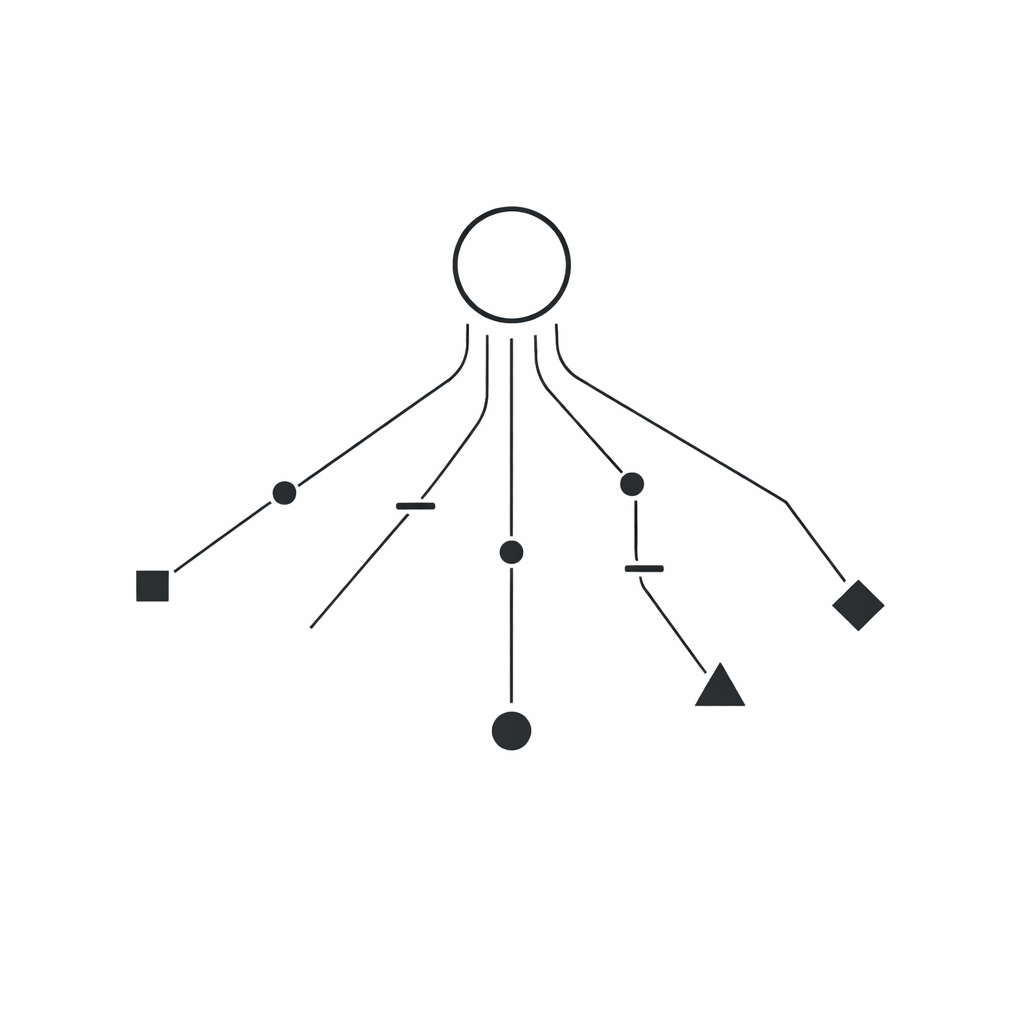
Frontier models are leapfrogging each other across different skill pockets while product experiences like memory, projects, integrations, and UX are evolving at very different speeds.
That’s why the question is no longer:
“Which model is best?”
👉 The best model is now task-dependent, not brand-dependent.
-
Some models excel at structured reasoning and enterprise knowledge work
-
Others shine in agentic execution, artifacts, and multi-step workflows
-
Some dominate large-context synthesis and multimodal inputs
The real advantage no longer comes from picking one model.
It comes from knowing which model to use, for which problem, at which moment—and designing systems that can operate across them responsibly.
Part 1: AI Isn’t Replacing Systems. It’s Redefining Their Purpose.

In the last few days, Anthropic announced new enterprise-oriented capabilities for Claude, extending beyond a general assistant into more structured, workflow-aware use cases.
The focus was on enabling Claude to operate with greater context, persistence, and integration inside business environments, particularly where reasoning, compliance, and structured decision support matter.
It is a signal of how the future of enterprise AI is being designed deliberately and responsibly.
This is not about AI replacing systems.
It is about designing AI that can eventually act within defined boundaries.
Most enterprise platforms today are Systems of Record.
They capture what happened.
They support audit, traceability, and compliance.
They are, by design, retrospective.
What these new AI capabilities begin to point toward is a future direction : Systems of Intent.
Systems of Intent do not execute work.
They define what may happen.
They encode boundaries, constraints, and escalation logic.
They govern decision-making before execution occurs.
The mistake would be to ask, “Are enterprises ready for this?”
The better question is, “Are enterprises designing for it?”
That distinction between readiness and design is where the real story sits.
I’ll explore that next.
About
Mahin Chugh is a seasoned digital-transformation leader with deep experience in solution architecture and strategic account management. His work bridges technology, governance, and business value realization. He has held leadership roles at Oracle, Hewlett Packard, Tata Consultancy Services, and Icertis, delivering large-scale ERP, SaaS, and outsourcing programs across Australia, the Nordics, the UK, India, and the EU. Mahin specializes in aligning CLM/S2P, risk, and data platforms to protect margin and accelerate growth—managing multi-vendor ecosystems and translating strategy into measurable outcomes. He is certified in TOGAF, PRINCE2, and ITIL. Through GSP Strategic Advisors, he helps enterprises design contract-intelligence loops that convert commitments into results; at Nexis Creative, he leads brand-driven initiatives that amplify those results.
Disclaimer
GSP Strategic Advisors strives to provide accurate and reliable information on this website but makes no guarantees regarding its accuracy, completeness, or currency. All content is provided “as is” and may be amended without notice, including details on services and fees. GSP Strategic Advisors is not liable for any loss or damage resulting from the use of this website or reliance on its content. Use of this website is at your own risk. Links to third-party websites are provided for convenience only and do not imply endorsement or approval by GSP Strategic Advisors